
Curriculum implementation is often treated as a technical task: choose materials and train teachers. But the truth is that curriculum implementation, like any meaningful change, requires a much more human approach focused on giving teachers, and leaders, what they need to make some pretty dramatic shifts in their day-to-day work.
At Rivet, we’ve developed a simple change-management flow adapted from the Knoster Model for Change to help leaders diagnose what’s in place–and what’s missing–in their curriculum implementation. The flow includes five components: Vision, Skills, Incentives, Resources, and an Action Plan. When all five are in place, implementation succeeds. When one is missing, leaders see very predictable challenges.
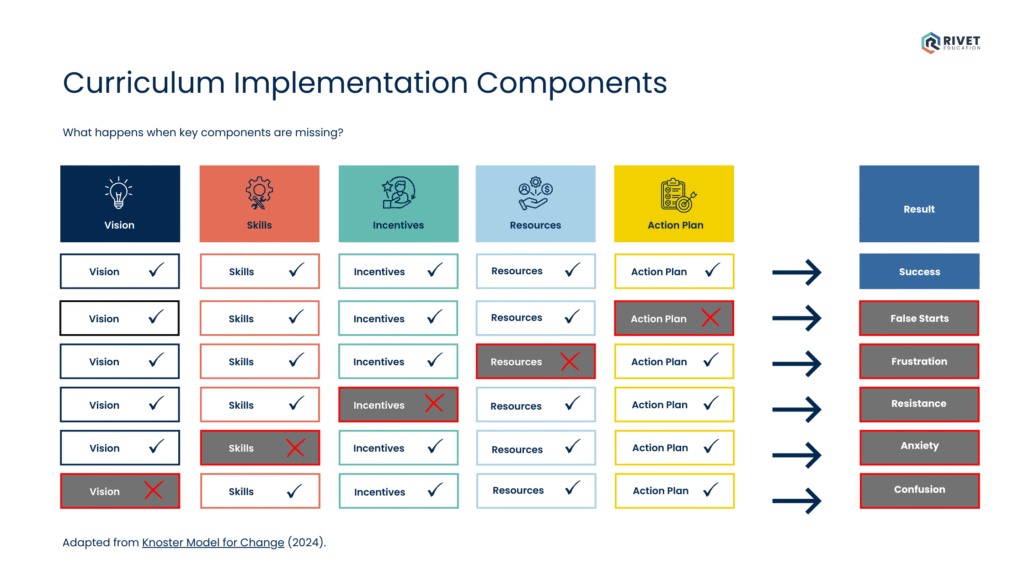
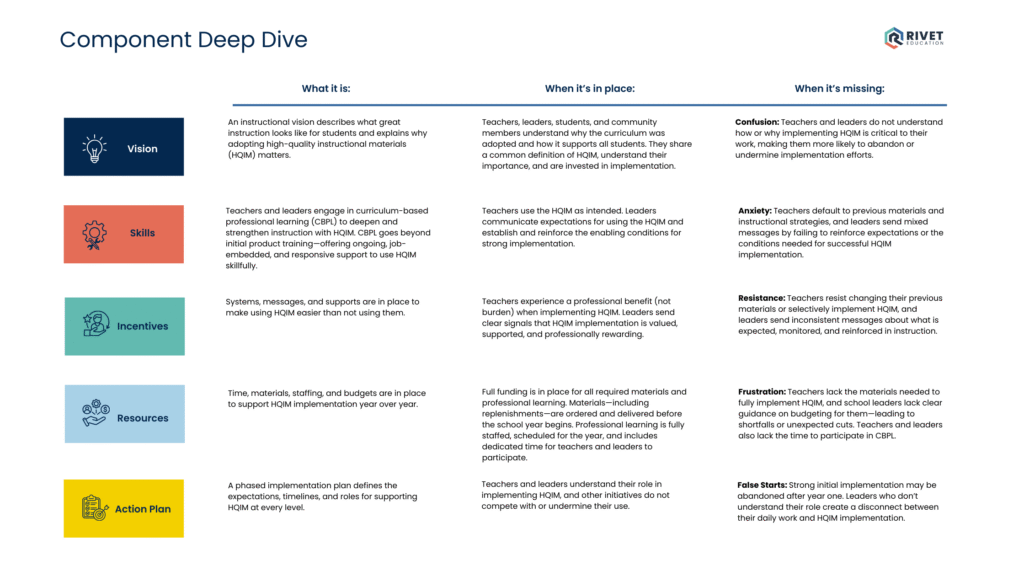
Below, we walk through each change management component, offering some clear examples of what it looks like when the component is in place versus when it’s missing. Fair warning: some of these non-examples may feel uncomfortably familiar.
Vision: Why this curriculum, and why now?
When it’s in place: Leaders can clearly articulate what strong instruction looks like in classrooms and how the adopted high-quality instructional materials support that vision. Teachers understand why the district made the shift and how the curriculum helps students access grade-level work. Consistent language is heard across schools, from board meetings to PLCs.
When it’s missing: Confusion creeps in. Teachers quietly wonder if this initiative will last, school leaders interpret expectations differently, and classrooms drift back to old practices. Without a shared instructional vision, implementation feels optional even when it isn’t.
Skills: Do people know how to do the work?
When it’s in place: Teachers and leaders engage in curriculum-based professional learning that goes beyond initial product training. Professional learning is job-embedded, ongoing, and focused on using the materials as intended. Leaders reinforce expectations and create conditions for practice and feedback.
When it’s missing: Anxiety takes over. Teachers default to previous materials or classroom strategies that feel more comfortable when new lessons feel challenging. Leaders send mixed messages by failing to reinforce expectations. The curriculum is technically “in use” but not in the ways that drive student learning.
Incentives: Is this work valued?
When it’s in place: Systems, messages, and supports make using the curriculum easier than not using it. Teachers experience a professional benefit—not burden—from implementation. Leaders consistently signal that strong curriculum use matters in observations, coaching, and conversations.
When it’s missing: Resistance grows. Teachers selectively implement materials or push back on expectations, especially when other initiatives compete for attention. Mixed signals from leadership erode momentum.
Resources: Are the basics covered?
When it’s in place: Materials arrive on time. Replenishments are planned. Time for professional learning is protected. Budgets align with priorities year over year. Leaders don’t scramble midyear to fill gaps.
When it’s missing: Frustration sets in. Teachers lack materials. Leaders face unexpected budget shortfalls. Curriculum-based professional learning gets squeezed out, and even strong commitment can’t overcome missing supports.
Action Plan: Who does what, and when?
When it’s in place: A clear, phased implementation plan defines roles, timelines, and expectations at every level. Leaders understand their role in supporting curriculum use, and other initiatives don’t undermine the work.
When it’s missing: False starts are common. Year-one momentum fades, leadership turnover disrupts progress, and implementation stalls despite good intentions.
The good news
This work is absolutely doable. Districts across the country are making real progress by treating curriculum implementation as the change management work it is—and by using a clear roadmap to guide decisions.
If you’re looking for a practical way to assess where your district stands and what to prioritize next, Rivet’s Instructional Materials Implementation Tool can help leaders diagnose strengths, identify gaps, and take informed action. With the right vision and a clear plan, rallying the troops becomes not just possible—but powerful.
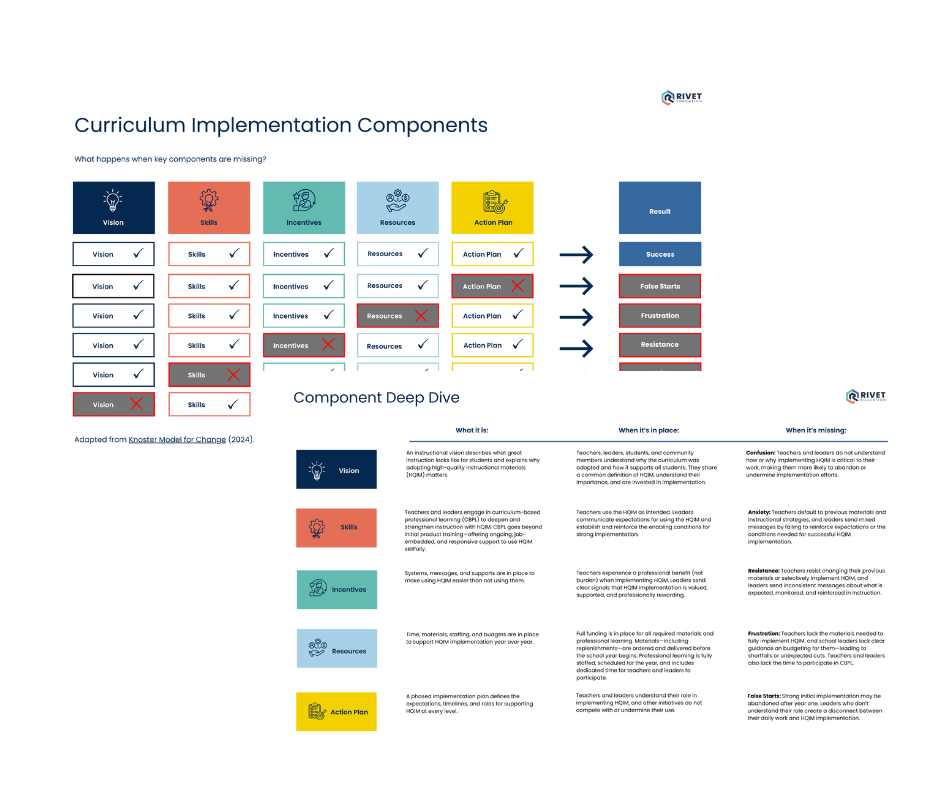
Download the HQIM Change Management Framework as a PDF.