This time of year, I occasionally browse the Teachers subreddit to see what educators are saying about professional learning and curriculum as they head into a new school year. I take Reddit commentary with the appropriate grain of salt, but it can be a helpful window into what teachers are thinking and experiencing.
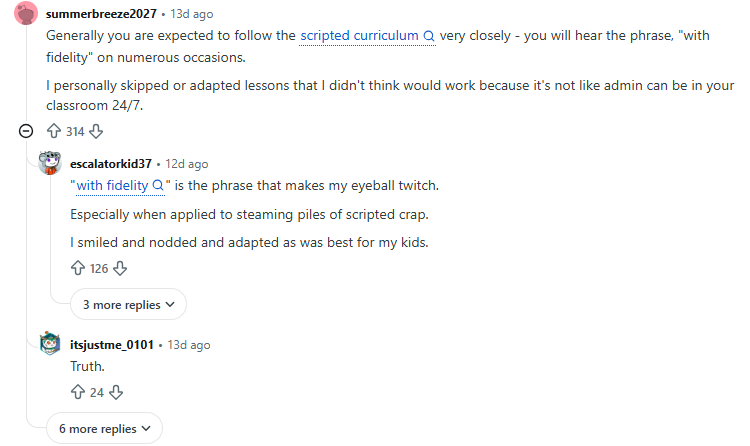
Recently, a discussion about district requirements for “scripted curriculum” got me thinking about some of the jargon we use in education.
When we talk about HQIM implementation, we used to say fidelity. Now, we’re more likely to say integrity. But what do either of those words actually mean? More importantly, do they help teachers understand what we’re asking them to do as they implement HQIM while responding to the students sitting in front of them?
At the risk of sounding like someone who spends too much time on social media, Instagram helped me figure it out. I was scrolling when I came across a creator sharing reviews and questions people had left on recipes. There were some gems:
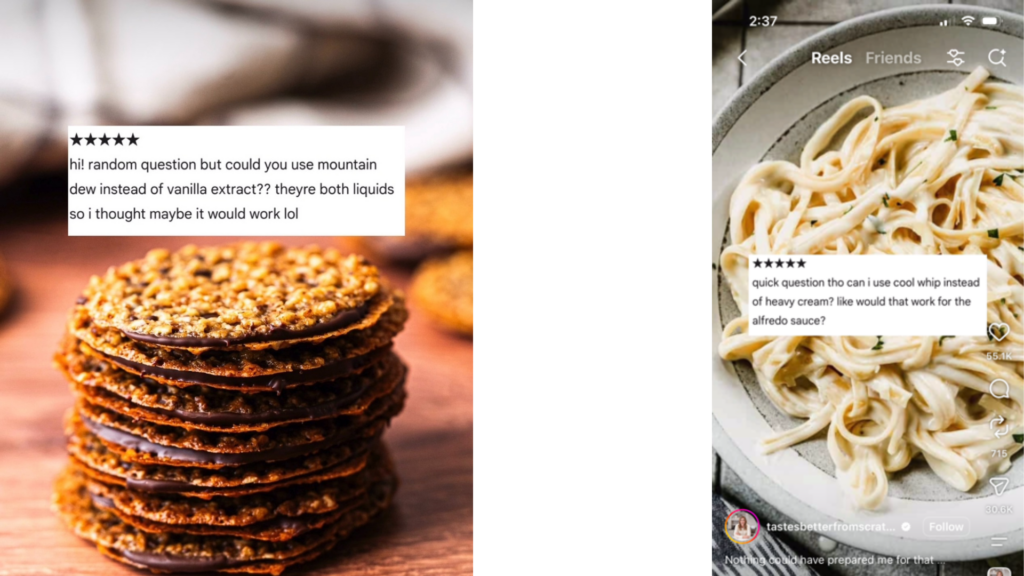
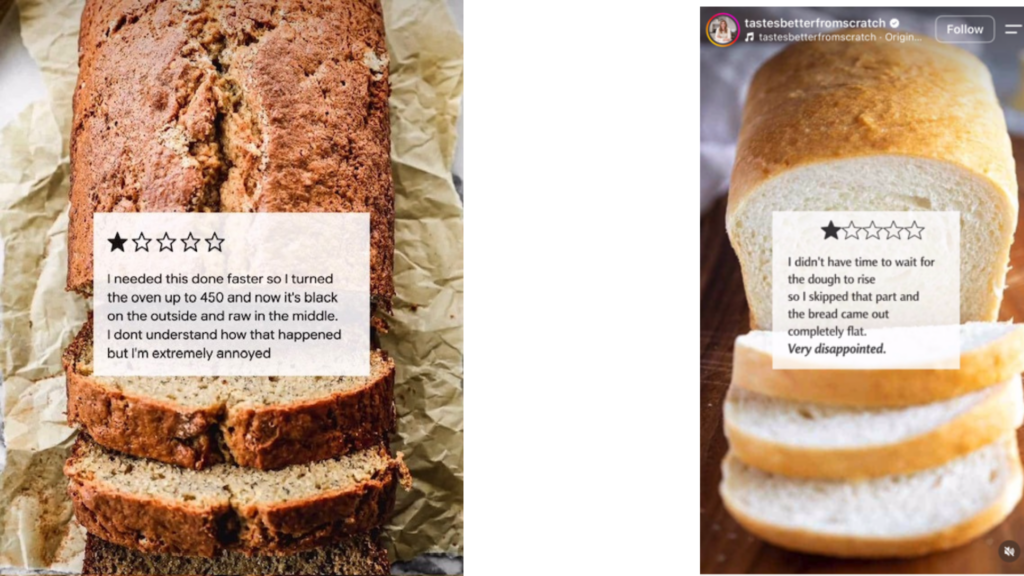
As anyone on my team can tell you, I love finding the right analogy to make a point. And somewhere between “Mountain Dew instead of vanilla” and “bread that refused to rise,” I found one.
I’ve often said that implementing HQIM is closer to cooking than baking.
Baking demands precision. While some adjustments can be made, using a little too much or a little too little of an ingredient can dramatically affect the outcome. Cooking tends to give you more room to adjust. Add more garlic. Use less spice. Substitute ground turkey for ground chicken. You can make all kinds of changes and still end up with something that resembles the dish you set out to make.
That last part is important.
Because cooking is flexible, but it isn’t infinitely flexible.
You can add more garlic to the pasta sauce and still have pasta sauce. But at some point, if you substitute enough ingredients, skip enough steps, or change the cooking method entirely, you aren’t making the same dish anymore. And sometimes the step that seems expendable, such as letting the dough rise, is actually essential to getting the intended result.
Ask me how I know.
The tricky part is that knowing the difference requires some understanding of how cooking works. An experienced cook might glance at a recipe and immediately recognize which ingredients are flexible, which techniques matter, and which substitutions are likely to cause trouble. Someone who is less experienced may not know why a particular ingredient or step is there in the first place.
We can’t expect people to automatically know what can and can’t be changed in a recipe if they haven’t had opportunities to cook, learn from others, understand the techniques, and gain experience.
And that is where the analogy matters for HQIM.
When we ask teachers to implement HQIM with integrity, we aren’t asking them to treat the materials like a script that can never be touched. Teachers know their students and will inevitably need to make decisions and adjustments.
The question is not “Did you change anything?”
The better question is “Did your changes preserve what the materials were designed to do?”
Answering that question requires understanding the recipe before changing it.
What is this lesson or unit trying to accomplish? Why are the tasks sequenced this way? What work are students being asked to do, and why does that work matter? Which components are essential to the intended learning, and which offer more room for adjustment? If I make this change, what happens to the experience students were supposed to have?
That kind of understanding is what makes thoughtful adaptation possible.
It also means that implementing HQIM with integrity isn’t simply an expectation we can hand to teachers along with a curriculum and assume they will know how to meet it. Just as becoming a confident cook takes experience, observation, experimentation, and learning from others, becoming a skillful implementer of HQIM takes time and support.
So perhaps integrity is less about following the recipe exactly and more about knowing the recipe well enough to make informed choices.
Add the garlic. Adjust the spice. Or, to use an example of teaching instead of cooking: take time to pause for the misconception. In a recent conversation with a teacher, she talked about a student confidently sharing a misconception about long division and decimals. Several classmates nodded in agreement. The teacher could have quickly corrected them and moved on. Instead, she asked, “Tell me how you know.”
More students jumped in. Minutes ticked by as they reasoned their way further into the misconception. And then: lightbulb. One student realized they were wrong and explained why to the class.
The teacher had made a choice to linger. She gave students the space to wrestle with the idea and learn from one another, without losing sight of what the lesson was designed to accomplish.
That’s the work of a skilled cook.
Just make sure you know which ingredients make the dish what it is before you change them.